
How to Check Criminal History in Armstrong County
Armstrong County does not publish one local criminal-history database. Choose a route by the question. The Armstrong County and District Clerk searches the constitutional county-court misdemeanor files and 47th District Court felony files. The sheriff supplies existing offense and arrest records through a written public-information request. Carson County Jail answers current local custody questions, while Texas DPS maintains the statewide repository.
Collect the subject's full name, spelling variants, an approximate year, and a case or report number when known. Give only the identifiers the custodian needs. Do not send a Social Security number in ordinary email. Ask whether a clerk result is an index, docket sheet, certified copy, or noncertified copy because those products serve different needs.
- Choose the clerk for a filed case, the sheriff for an incident or arrest report, or Carson County for present custody.
- Give a name, useful spelling variants, date range, case level, and known report or cause number.
- Compare identity details and dates before treating a name match as the right person.
- Follow an arrest into the clerk file to learn whether prosecutors filed a charge and how the court resolved it.
- Order a certified disposition or use a fingerprint personal review when identity or correction requires official proof.
The county's official office directory shows the courthouse and agency starting points.

The county page confirms that most local record paths converge in Claude even though each office remains a separate custodian.
Armstrong County Criminal Record Chain
A name search cannot merge every Armstrong County criminal record into one authoritative file. An arresting officer creates an incident and arrest record. Carson County creates the booking entry if the person enters its jail. The prosecutor decides what to file, the combined clerk opens the case, and the court records the disposition. Local agencies then report eligible events to DPS. Each source answers a different point in that chain.
| Question | Official starting point | Record returned |
|---|---|---|
| What was reported or alleged? | Armstrong County Sheriff or Texas DPS for a trooper event | Incident, arrest, or crash material |
| Is the person held now? | Carson County Jail and VINELink Texas | Booking and custody status |
| What was filed and decided? | Armstrong County and District Clerk | Docket, pleadings, judgment, sentence |
| What reached the state repository? | Texas DPS Crime Records Service | Public conviction/deferred data or personal CHRI |
Record flow: Arresting agency › booking agency › prosecutor › Armstrong County courts › Texas DPS.
Official Texas Background Checks
The Texas DPS Criminal History Conviction Name Search is the public state product. It returns public conviction and deferred-adjudication data under Government Code section 411.135. Users create an account and buy credits. A search costs one $1 credit, including a no-match result. Name, date of birth, sex, and race help narrow results, but DPS puts the duty to decide whether a match concerns the intended person on the user.
A mailed CR-42 search costs $10 per person and may be certified on request without another certification charge. For the closest identity match, a person reviewing their own record should follow DPS form CR-63 and the purpose-specific FAST appointment process through IdentoGO. The standard DPS figures captured in the research are $15 for the record check and $10 for electronic fingerprint capture. No fixed Armstrong County enrollment site was verified, so the live locator controls.
| Option | Identity basis | Published charge |
|---|---|---|
| DPS public portal | Name and supplied identifiers | $1 credit per search |
| CR-42 by mail | Submitted name and identifiers | $10 per subject |
| DPS personal review | Fingerprints through FAST | $15 check plus $10 capture |
The official DPS public search entry illustrates the account-based state route.
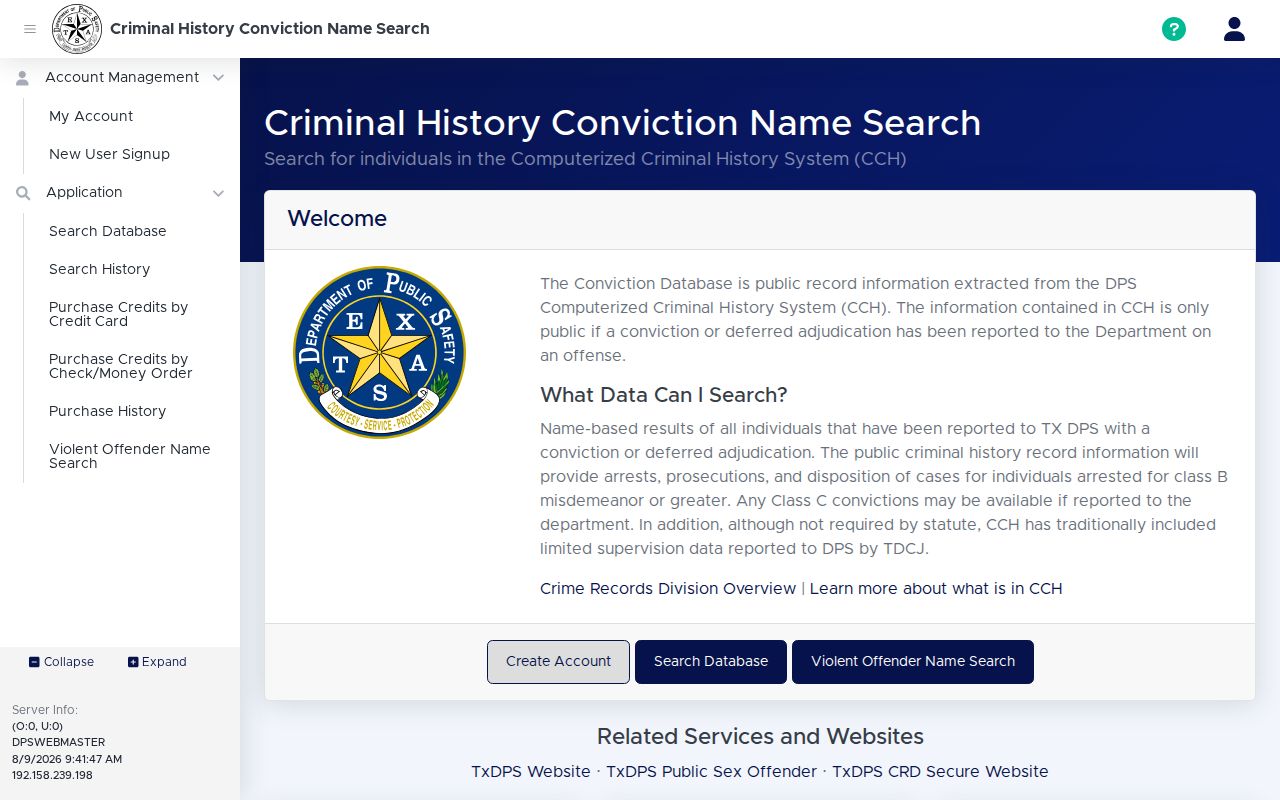
It supplements, but does not replace, the Armstrong County clerk's file for a recent or incompletely reported outcome.
Armstrong County Clerk Record Counter
County and district records share one elected clerk in Armstrong County. Tawnee Blodgett's office is at 100 Trice Street, P.O. Box 309, Claude, TX 79019. The phone is 806-553-2861, fax is 806-553-5981, and email is tawnee.blodgett@co.armstrong.tx.us. Published hours are Monday through Thursday, 8:00 a.m. to 6:00 p.m., open through lunch and closed Friday.
Ask that office for a felony file from the 47th District Court or a Class A or B misdemeanor file in the constitutional county court. A fine-only citation or Justice of the Peace warrant follows a different route. The Armstrong County JP says it is the only office that can assist with an Armstrong County citation and lists 806-553-2860 extension 1 plus jpcourt@co.armstrong.tx.us and armstrongjp@co.armstrong.tx.us.
re:SearchTX is only a supplement. An official 2024 judiciary report said its large document collection excluded criminal case records. A failed portal search should therefore lead back to the Armstrong County clerk, not to a conclusion that no case exists.
Types of Criminal Records
Armstrong County criminal history is a group of records, not one document. The source and legal meaning change as an event moves from report to judgment and supervision.
- Incident, arrest, and booking records: The investigating agency records the event, while the jail records intake, bond, custody, and release.
- Criminal court case files: The clerk keeps the cause number, charging paper, docket events, plea, judgment, orders, and sentence.
- DPS CCH entries: The repository links reported arrest, prosecution, court, and supervision events to identity data.
- Warrants: The issuing court holds the judicial record while law enforcement receives execution and status data.
- Custody and supervision records: Carson County, TDCJ, the local CSCD, and the Parole Division hold distinct parts.
- Registry records: DPS manages the public sex offender registry, with local authorities handling registration and verification.
A booking proves that custody processing occurred. It does not prove guilt. Likewise, a filed indictment is an accusation, while the judgment records the final court result.
Armstrong Arrests, Carson Bookings
The Armstrong County Sheriff's official page says all current Armstrong inmates are housed in Carson County Jail. That regional arrangement divides one arrest across two counties' offices. Armstrong County retains the sheriff report and local court case. Carson County holds the booking and current jail record. Call 806-537-3511 for inmate information or use the sheriff-linked VINELink Texas service for custody status and notifications.
VINELink is not a full Armstrong County criminal record. It does not replace the offense report, charging instrument, docket, or final disposition. TDCJ's locator is different again: it covers state prison custody and may show the TDCJ number, unit, offense, and projected release information. Federal custody belongs to the Bureau of Prisons locator.
A deeper account of the county arrest trail appears in the Armstrong County arrest history resource.
What an Armstrong County Criminal Record Shows
The meaning of each field depends on its source. A DPS cycle is identity and event based. A court file is document based. A jail record is custody based. Compare dates, agency names, cause numbers, and dispositions rather than treating all charge labels as final.
| Name & Identifiers | Reported name, aliases, birth date, sex, race, SID, FBI number, and transaction identifiers where lawfully available. |
|---|---|
| Arrest / Booking Data | Arrest date, agency, intake time, booked charges, bond, custody status, and public release data. |
| Charges & Statutes | Booked allegation, prosecutor-filed count, charging instrument, offense level, and statute citation. |
| Disposition | Pending, dismissal, acquittal, deferred adjudication, or conviction as reported by the court. |
| Sentence | Jail or prison term, fine, court costs, restitution, and community supervision when ordered. |
| Custody / Supervision | Local jail status, TDCJ placement, parole, or a court entry concerning community supervision. |
Sensitive identifiers, victim information protected by law, financial account data, and restricted juvenile information are redacted or withheld. A public DPS name result is also narrower than the fuller fingerprint record available to the subject.
Armstrong County Sheriff Record Requests
The Armstrong County Sheriff accepts written public-information requests by email at sheriffanderson@co.armstrong.tx.us, fax at 806-553-2998, mail to P.O. Box 531, Claude, TX 79019, or hand delivery to the courthouse second floor. A request should be dated and signed and should describe an existing record with a useful date range, location, subject name, and report number if known. The office need not create a new list or answer questions.
Standard paper copies cost $0.10 per printed side. More than 50 standard pages can add labor, overhead, and retrieval charges under Attorney General rules. Postage is actual cost. Body-camera requests must identify the date and approximate time, the specific location, and at least one known subject. The published body-camera charge is $10 per responsive recording plus $1 per full minute of responsive video or audio.
The county public-information instructions explain that requests can go to the office that actually holds the record.
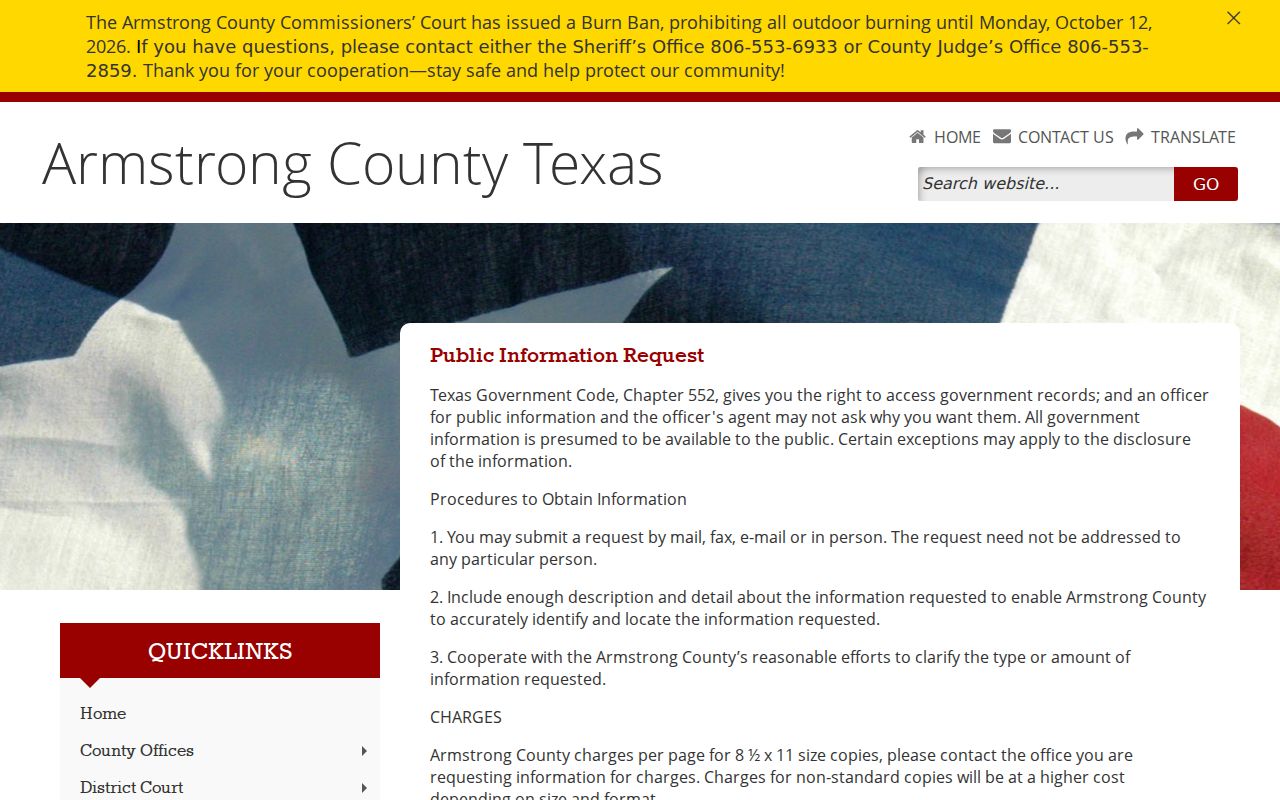
A clear request can reduce clarification and help the custodian give a useful cost estimate before work begins.
Public Access Laws
Texas law separates agency records, court case files, repository data, and restricted records. The Texas Public Information Act applies to county agencies, but judicial case access runs through the clerk and court law rather than an ordinary TPIA request.
Key Texas laws:
Government Code Chapter 552 favors access to existing government records while preserving stated exceptions.
Government Code sections 411.083 and 411.135 restrict general CHRI but make DPS conviction and deferred-adjudication data public.
Texas Rule of Judicial Administration 12 governs administrative judicial records, not the adjudicative case file requested from the clerk.
Code of Criminal Procedure Chapter 55A sets event-specific expunction rights and procedures.
Government Code Chapter 411, Subchapter E-1 creates defined nondisclosure routes and exceptions.
Section 552.108 can protect specified investigative and prosecution material, yet basic information about an arrested person, an arrest, or a crime is generally releasable unless another law makes it confidential.
Armstrong County Warrant Checks
No official Armstrong County online warrant portal was found. Start with the office tied to the case. The sheriff can clarify law-enforcement custody and accepts focused written requests for existing releasable records. The combined clerk can trace a district or county-court capias or bench warrant. The JP handles its own fine-only citations and related process. Claude Municipal Court handles city citations, although the official city site lists no online case lookup.
A person who learns of a possible warrant should not rely on a third-party list or appear at an unknown office without first confirming instructions. Call the issuing court or speak with counsel about a safe resolution. A warrant is a court order for custody, not proof of conviction. Supporting affidavits may also be sealed for a time or restricted by court order.
Sealed, Expunged & Restricted
Texas expunction and nondisclosure are different. An expunction under Chapter 55A generally orders agencies named in the case to destroy or delete covered event records. A nondisclosure order restricts ordinary public disclosure but leaves the record available to criminal-justice agencies and other recipients authorized by statute. A dismissal alone does not prove eligibility for either remedy.
Armstrong County residents can first identify the court, cause number, arrest event, and final outcome through the clerk and their own DPS fingerprint review. Then the facts must fit the current statute. The Texas Judicial Branch publishes nondisclosure forms organized by legal route, but that statewide page does not establish Armstrong County's current filing fee. Ask the clerk.
If DPS still shows a wrong or missing outcome, obtain a certified disposition or order from the court and use DPS Error Resolution. DPS says an ordinary photocopy is not enough in place of a certified court document.
Armstrong County Custody and Parole
Community supervision, parole, and incarceration create separate Armstrong County criminal records. A sentencing court orders community supervision, commonly called probation. The serving CSCD keeps its working supervision file. The Texas Board of Pardons and Paroles makes parole decisions, while the TDCJ Parole Division supervises people released on parole or mandatory supervision.
TDCJ assigns Armstrong County to the Amarillo District Parole Office in Region V. The nearby Amarillo Board Office handles decision correspondence, not local probation files. Search TDCJ offender information for state custody, then read the Armstrong County judgment and later docket entries for probation, deferred adjudication, revocation, or discharge.
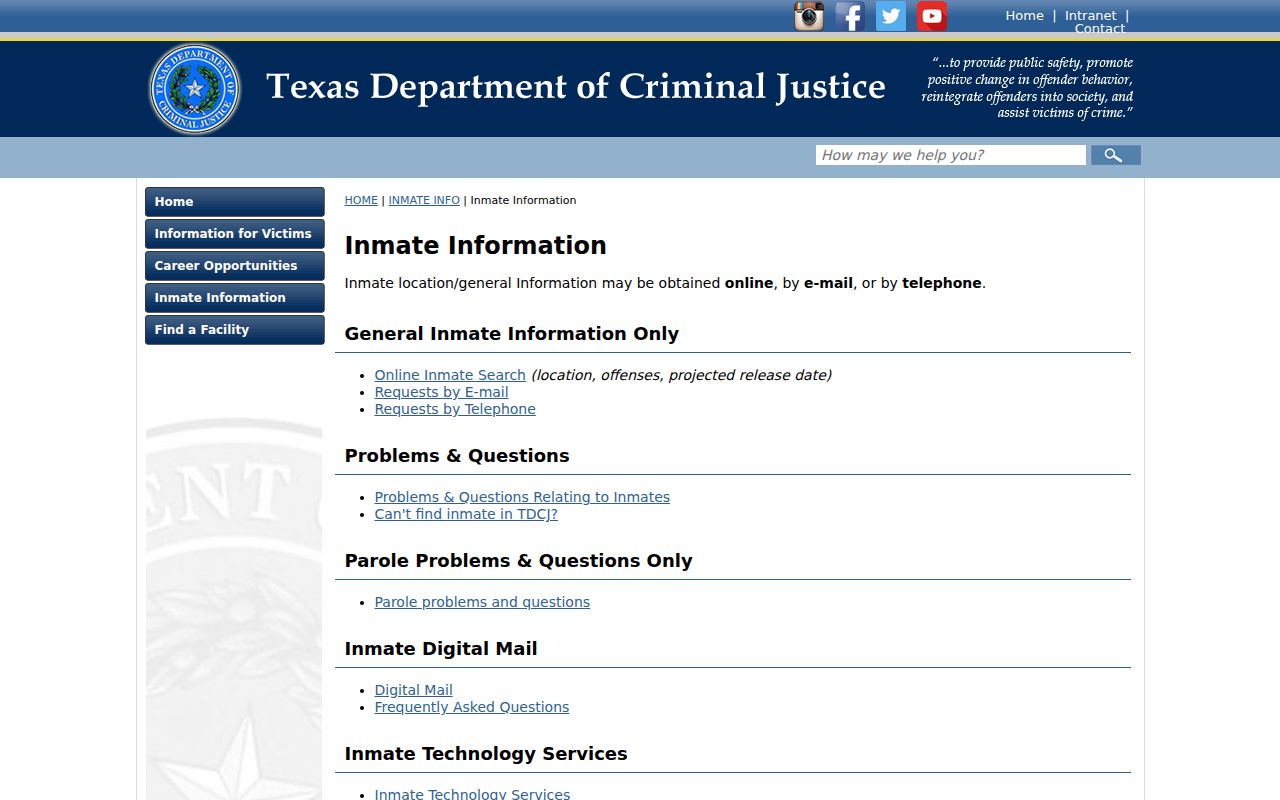
The state locator cannot answer whether someone is in Carson County Jail, on local community supervision, or held in federal custody.
TDCJ describes the Parole Division's supervision role separately.
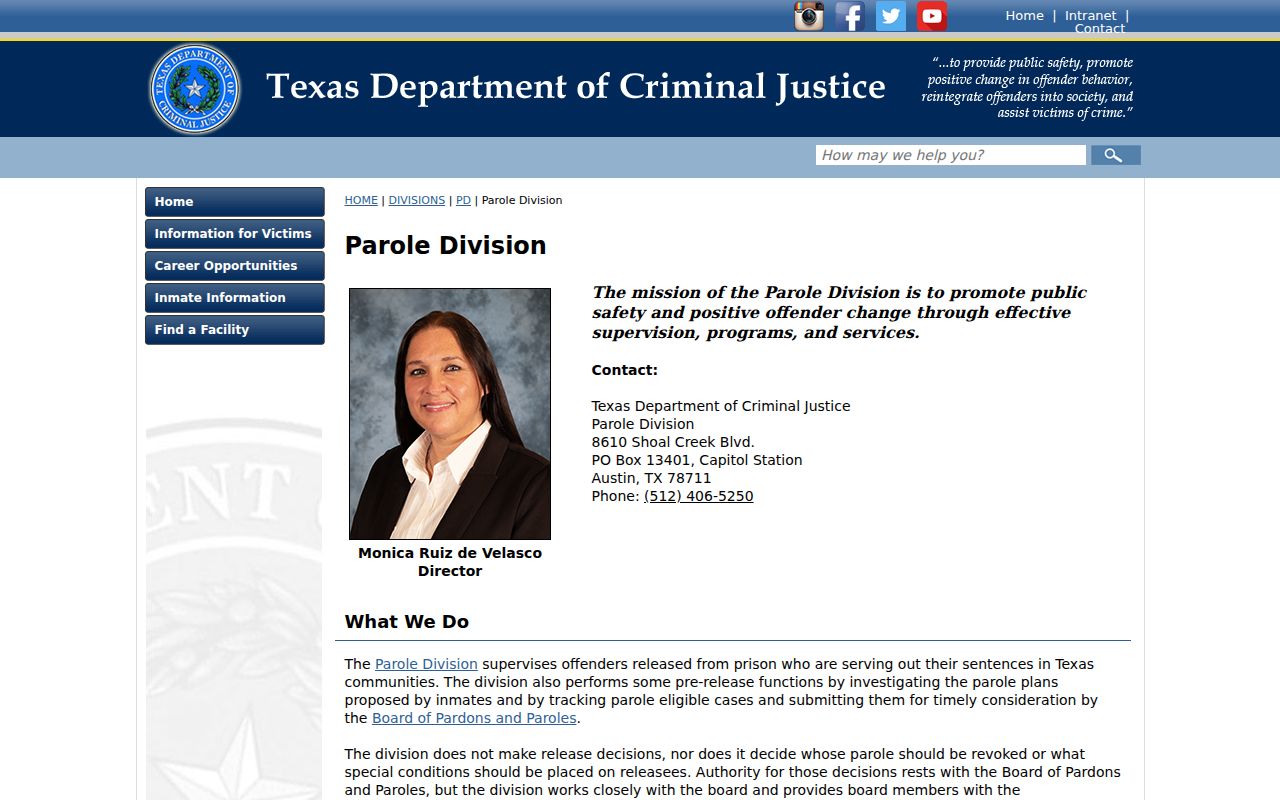
That separation helps prevent a parole office from being mistaken for an Armstrong County criminal-record counter.
The Texas Board of Pardons and Paroles publishes the release-decision framework.
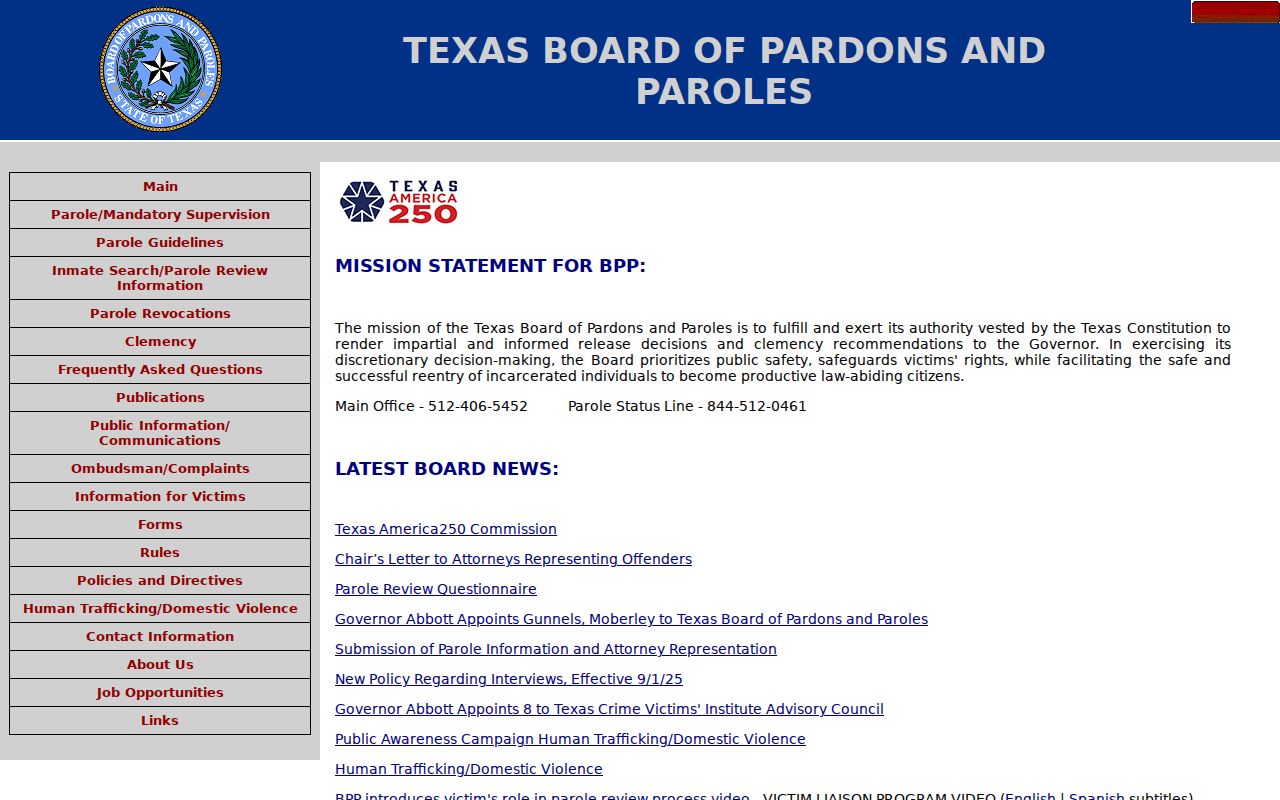
A board decision record and a Parole Division supervision record therefore describe related but distinct functions.
Armstrong County Justice Hub
The 1912 courthouse makes Armstrong County unusual. The clerk counter, sheriff's second-floor office, county judge, and other functions cluster around Trice Street in Claude. The Texas Historical Commission records that Armstrong County was created in 1876, organized in 1890, and developed around ranching and the railroad before the present courthouse was built.
The address differs by office. The county lists 101 Trice Street for the courthouse, while the clerk uses 100 Trice Street. Call the intended custodian before travel and use its mailing address. That small step avoids sending a court-record request to the sheriff or an incident request to the clerk.
The Armstrong County Judge's official page shows another office in the same county government network.

The image helps place records access within a compact county government rather than a stand-alone criminal-justice complex.
Armstrong County Charge Decisions
The 47th Judicial District Attorney is based in Amarillo but handles felony offenses in Potter and Armstrong Counties and misdemeanor offenses in Armstrong County. Its work begins with the law-enforcement presentation and can include grand jury proceedings, pleas, trials, sentencing, appeals, and victim assistance. That regional structure explains why an Armstrong arrest report, prosecutor file, and local clerk case do not all sit in one building.
The Potter and Armstrong County Public Defender and related regional arrangements serve eligible defendants only through court appointment. A judge determines eligibility after financial information is supplied. Those defense files are not public criminal-history products, though the clerk's docket can identify counsel and court events.
Armstrong County links its district attorney channel from the official county site.

The official route ties the county case to the regional prosecutor without turning a prosecutor presentation into a conviction.
Criminal Records by City in Armstrong County
Claude is Armstrong County's only incorporated city. The official Claude department directory lists no police department, so sheriff and Texas DPS records remain central for local incidents. Claude Municipal Court handles city ordinance, traffic, and other fine-only matters within its jurisdiction, while higher criminal cases move through Armstrong County courts.
Claude Criminal History
Population 1,186 in the ACS 2020-2024 profile · City Hall, Municipal Court, sheriff, clerk, and state record routes.